

"Witnessing the Unseen": Visual Artist John Halaka Reflects on Presence and Absence in Native Lands
John Halaka was the second featured artist in the Religion and Public Life series Arts and the Moral Imagination. Halaka is a visual artist working in the fields of painting, drawing, photography, oral history and documentary filmmaking. He is a Professor of Visual Arts at the University of San Diego, and his artwork has been exhibited nationally and internationally in numerous solo and group exhibitions. He is the recent recipient of a Palestinian American Research Center Fellowship, that supported the first phase of his work in the West Bank, on a project titled "Vanishing Harvest: Meditations on the End of Palestinian Agriculture." He also received a Fulbright Fellowship to record the stories of Palestinian refugees living in Lebanon.
Halaka is currently developing a large series of drawings, titled Landscapes of Resistance, on maps of the United States and Palestine. The drawings honor histories of cultural survival and creative resistance against colonial repression by Native Americans, African Americans, Palestinians, and migrant workers.
In Halaka's Arts and the Moral Imagination session, titled, “Witnessing the Unseen: Reflections of Presence and Absence in Native Lands,” he presented images of his work that visual depict simultaneous presence and absence while discussing the complicated duality of being and not being for indigenous populations that have been displaced from their native land.
Speaking to Christina Williams, MTS ’26, John Halaka shared what he hopes people take away from his artwork and the event discussion as well as how we might put our moral imagination to the work of justice.
CHRISTINA WILLIAMS: Hi, I'm very happy to speak with you today. I know that you have an event coming up with HDS's Religion and Public Life, and I just wanted to ask you, what do you want for people to walk away from this event with?
JOHN HALAKA: I hope a lot of questions. I want them, first of all, to walk away with a sense of, "Do I know enough about this topic? Do I need to investigate it more? Do I need to listen more carefully?" Because part of the reflections about our role as witnesses is to unseen and unheard narratives and experiences of a displaced population. So the first question is, "Do I know enough? And if not, how do I find out?" Also, "if not, why haven't I been informed and whether its conditions that have made the experiences of these populations invisible or their stories unheard?" So that's one of the questions.
I also wanted to think about the images that I'm showing. I'm showing two projects. One of them are portraits of Palestinian refugees that I've conducted oral history interviews with. And I want them to look in their faces and to acknowledge them as human beings because one of the conditions that has been inflicted upon the Palestinians is that they've been kind of painted with a very broad brush as a society of terrorists, a society of imposters, a society that doesn't belong in the very land that they have belonged to for millennia. So, to begin to think about who these people are, instead of the masses of displaced humanity that we think of when we think of refugees. I want them to look in their faces. I'll share a couple clips from interviews I've recorded, so I wanted to listen to their stories.
And then I also want them to reflect on their responsibilities to these people, on how can they develop their moral imagination to address injustices, to address the harm, to help enable conditions that might make their stories more accessible to others, but also that might help to alleviate this mainstream status quo process of always having Palestinians be an oppressed population. Or, to say it maybe more literally, how to address a culture of supremacy that has imposed itself on us. I'll hopefully speak about this simple thing that all the Palestinians ask for (and I borrow the title of the book by the Reverend Naim Ateek) All we ask for is justice and only justice. We don't ask for supremacy. And is justice, is that an unfair request? Isn't that something that everybody deserves, right? So everybody has the right to ask for justice, but nobody has the right for supremacy. So I want people to leave with that sense of like, "Okay, we've allowed a culture of supremacy to exist unchallenged in large part, at least on the political stagee. And how do we kind of begin to reconsider that?"
And I also want people to begin to think of ways, and this is where the moral imagination comes in, where we challenge that without necessarily destroying that because it's not about destroying one thing to allow for the other. The two have to coexist in a fair, equitable world where both people can thrive and support each other. And that's where I think the idea of the moral imagination comes in. It's not about like denying and suppressing and destroying at all, quite the opposite, it's about liberating. So when Palestinians ask for liberation from repression, from occupation, from cultures of genocide, from displacement, that same request is as valid as it is for Palestinians as it is for Israelis. So until Palestinians are liberated, Israelis will always be enslaved as well. So that's where looking at that complex relationship between the two cultures. Right now there's been kind of this culture of the victim and the victimizers. The Palestinians refuse to be victims. But we need to kind of shift that balance so that there's not a victimizer in the people that have been victimized. They need to coexist in a way that is equitable. And the way that cherishes each of the society's virtues—cultural virtues, historical virtues, and religious virtues.
CW: That was amazing. Thank you.
Artwork and Insights by John Halaka
"When working with communities of refugees, one quickly realizes that the multiple generations of exiled people have been deliberately cast into the shadows of the world consciousness and forced behind a veil of political invisibility. It's important to remind ourselves that those peoples are not invisible, although they have been deliberately unseen. The refugees are also not mute, albeit their narratives continue to be muffled by dense political wall of silence, a wall that silences their stories. The stories reveal histories that few know about. I record and preserve their personal memories, as well as the memories of memories that were passed down to them by their elders and ancestors, so that we can begin to become informed witnesses to their unseen realities. I consider it a privilege, as well as a profound responsibility to be a humble carrier of those stories, to be a will and witness to their complicated realities. My work does not speak for them, they speak through my work so that you might become a carrier of their stories." —John Halaka

"This drawing, which was started in 1993 and completed with repeated revisions in 2003, is called Forgotten Survivors. It was focused on the forced absence of the refugees from native lands, their forced displacement, the shattering of their cultures, and the fragmentation of their families, their clans, their interlinked societies, and their broad disbursement into a global diaspora.
Refugees are reduced to a state of absence from their homeland and can quickly become an absence from our political consciousness. The men and women presented in a drawing become, like many other displaced indigenous populations, anonymous, forgotten survivors who exist in the shadows of the world's consciousness. The drawing was an effort to represent the anonymity of the refugees as they have been relegated to a life of drifting from nowhere to nowhere. The figures in the drawing represent humans, just like you and me, men and women who have been stripped of their identity and driven from their land, their past erased, their present unstable, and their future undetermined. They drift and they drift and they drift towards unknown destinies, with nothing to carry but their memories. They exist in a liminal space between an unstable physical presence and an erased historical absence.
I try to construct the drawing so that the transitory and unstable state of displaced population was made visible through the thousands of restless marks that define the forms of each of the figures and the space. Each of those marks is made up of two rubber stamped words that say forgotten survivors. I intended for the figures to look like they were in the process of simultaneously appearing and disappearing before our eyes. Their location between presence and absence is up to us, the viewers who stand as witnesses to their march from an erased past into an undefined future.
The anonymity of the figures invites each viewer to define her or his personal relationship to the unidentified men and women by projecting on the figures in the drawing their personal history as a survivor of people who have been violently displaced, or as the descendant and beneficiary of those who have forcibly displaced other populations from their native land.
There are many times when we're both of those things--the displaced and displacer, the colonized and the colonizer, the victims and the victimizer. That realization should provide us, whichever side of a conflict we stand on, with the possibility of beginning to understand the complexity of our opponents, and should offer us a glimmer of insights that could guide us to recognize their humanity.
Whether the figures become present or absent is up to the moral imagination of each viewer who witnesses their displacement. It's up to each of us as witnesses, to envision the possibility of their future, to acknowledge the instability of their present state, and to creatively address the historical harms that they suffered and the festering injuries they are forced to live with." —John Halaka

"In 2005, my approach to my work on exile changed dramatically when I started to record the personal stories of Palestinians who had been displaced from their homeland, as well as those who are living under occupation. The naked bodies that had earlier been lumped together in my images and presented as displaced masses of anonymous humanity, were replaced by individuals with faces, with names, and with unique stories that conveyed personal experiences with complex, vivid memories. Instead of my images exploring the physical absence of forcibly transferred population from their native lands, the personal experiences that I listened to redirected my drawings, my photographs, my films, and my oral history archive to focus on the psychological and emotional presence of the dispossessed.
I recognized through the stories I listened to that although banished from their homes and homeland, the spirit of the displaced are ever present in the Palestinian villages that were destroyed after 1948. I felt the spirits of the displaced hover like ghosts that persistently reclaim their emptied homeland. They were forced to leave, but their spirits remain, and their ghosts returned to repossess the villages after they died in exile. The emotional energy of the displaced was ever present in destroyed homes and demolished schoolhouses, and uprooted orchards that I walked through and photographed. While walking through destroyed villages, I better comprehended how memories of the fertile fields and groves that nurtured the elders’ once youthful bodies, are ever present in their imagination and their narratives, and that the voices of their ancestors materialize within their stories, like apparitions that haunted the spirits of generations of displaced Palestinians." —John Halaka
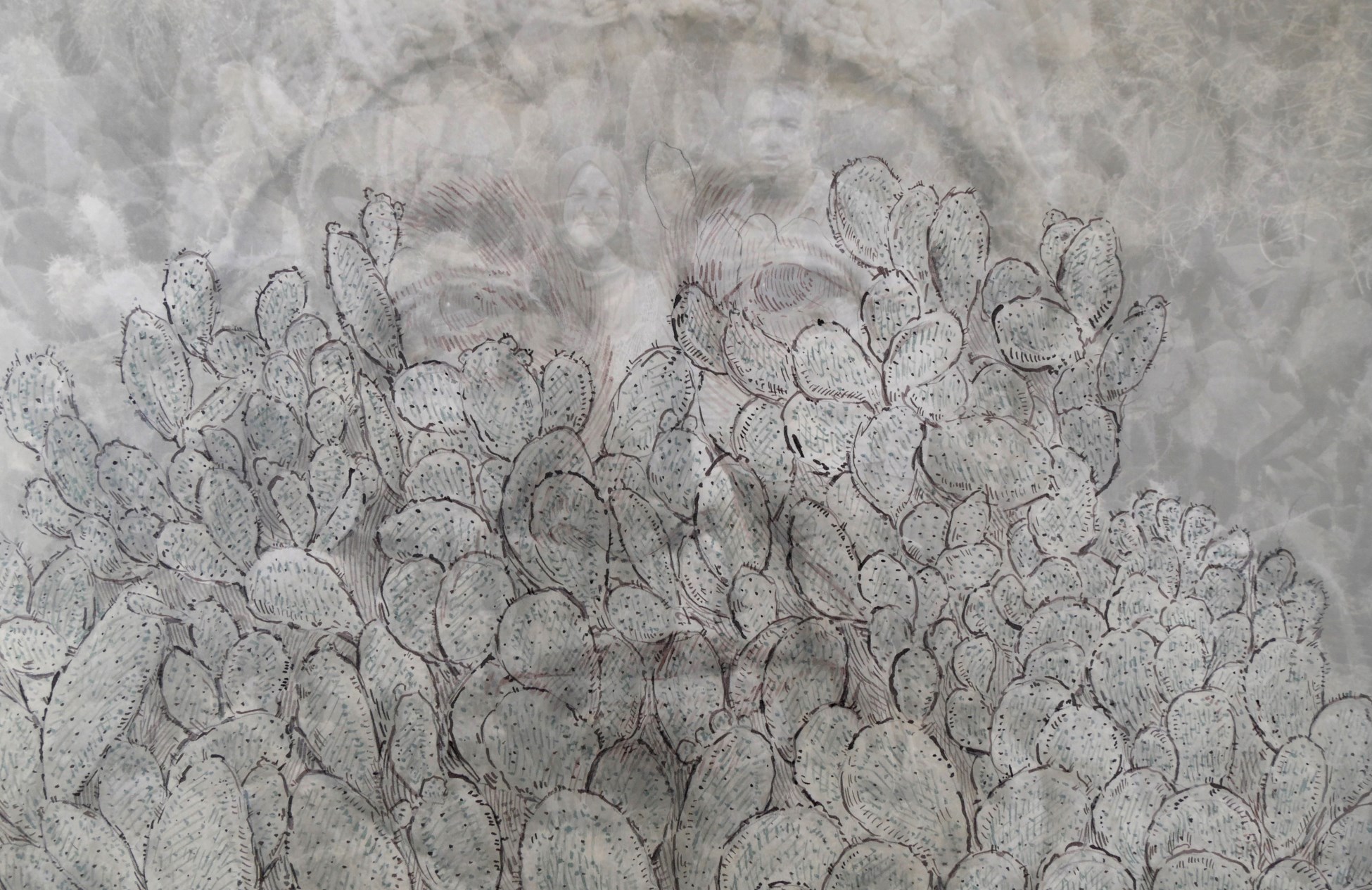
"I find inspiration in the work of the native American scholar Gerald Vizenor, who coined the term survivance, a combination of the two words survival and resistance, to describe the creative resilience of the indigenous people of the Americas against long and brutal histories of cultural and physical genocide.
The concept of survivance applies to the struggle of all colonized populations, as cultures of survivance are defined by an active Indigenous presence against imposed political, physical, and psychological absence. Acts of survivance underline a dynamic will of the individual and underscore the power of the collective by creatively employing memories, personal communal stories, as well as tales of ancient customs and evolving traditions to convey a living culture that refuses to disappear. The art of survivance is a collective act against imposed cultural erasure. It serves as an antidote to forgetting Indigenous histories, customs, and traditions, while helping to ensure that native experiences are preserved, and that current and future generations are well informed. The creative arts, including the diverse field of visual arts, might be the best vehicle for informing, developing and sustaining cultures of survivance.
The ability of artists to witness, interpret, assemble, reimagine, and creatively construct narratives of political, cultural, and spiritual resistance and survival, provides community of viewers with the potential to imagine and implement change. The art of survivance is a purgative that can potentially liberate our clogged moral imagination." —John Halaka
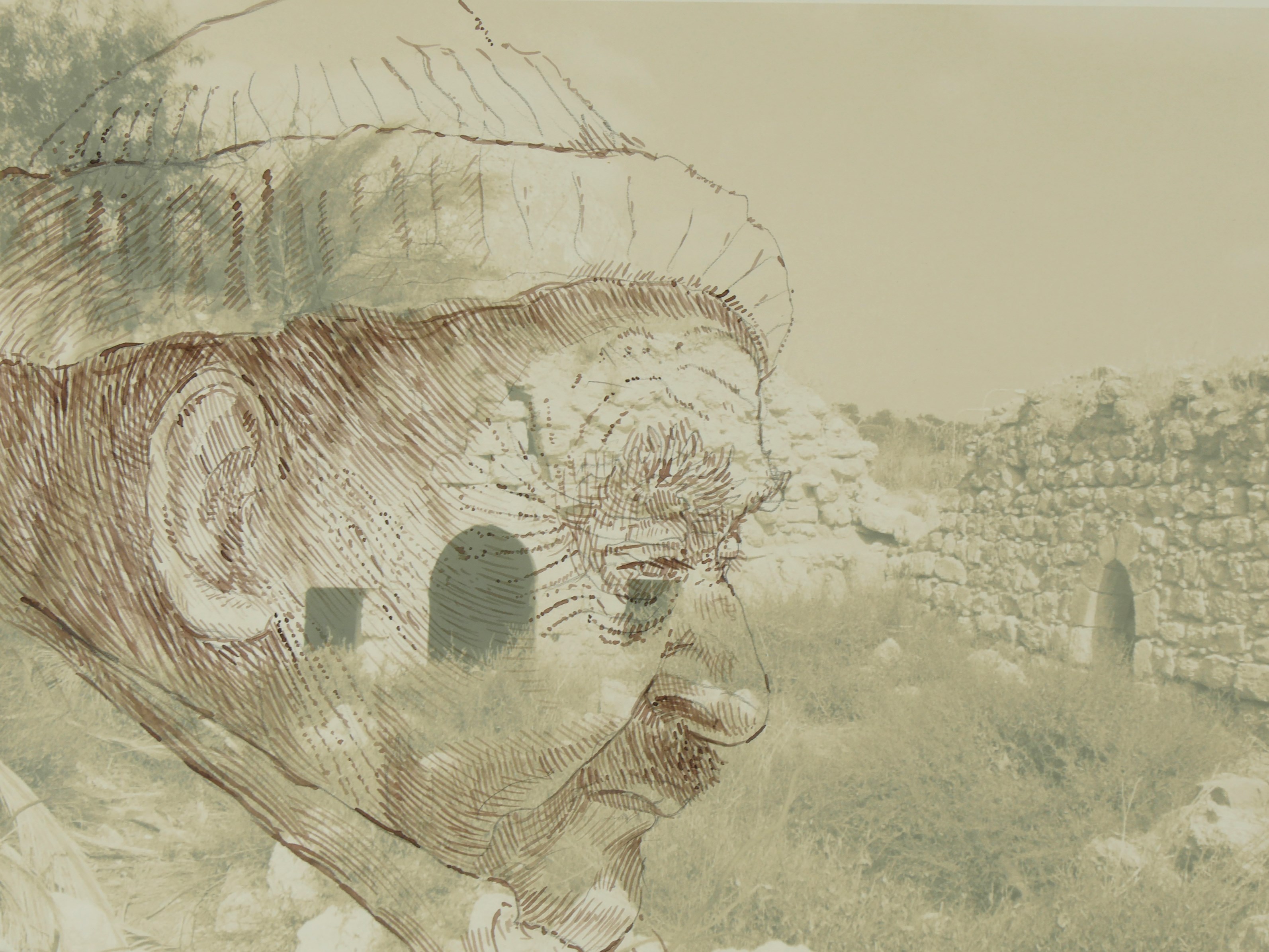
"The struggle for justice is the fuel that powers the creative engine of our moral imagination. The journey towards peace and reconciliation begins with a fundamental understanding that the acknowledgment of harm and repudiation of wrongs will set us on a path that leads towards justice. Justice must be founded on strong pillars of legal, political, and social equality that ensures a life lived in dignity for all involved. Equality for all and not supremacy for some is the foundation upon which a culture of justice must be built.
Because justice is a single trail that can guide us towards peace, and only in a state of peace can we find the path to reconciliation. Reconciliation is the road that can guide us to coexistence, while coexistence can lead to the mutual liberation of both combating population from cycles of hatred, of violence, and vengeance. Liberation will eventually guide former adversaries to the valleys of forgiveness. But before we can begin to proceed towards a distant valley of forgiveness, we have to be willing to witness the unseen and to listen to the unheard." —John Halaka
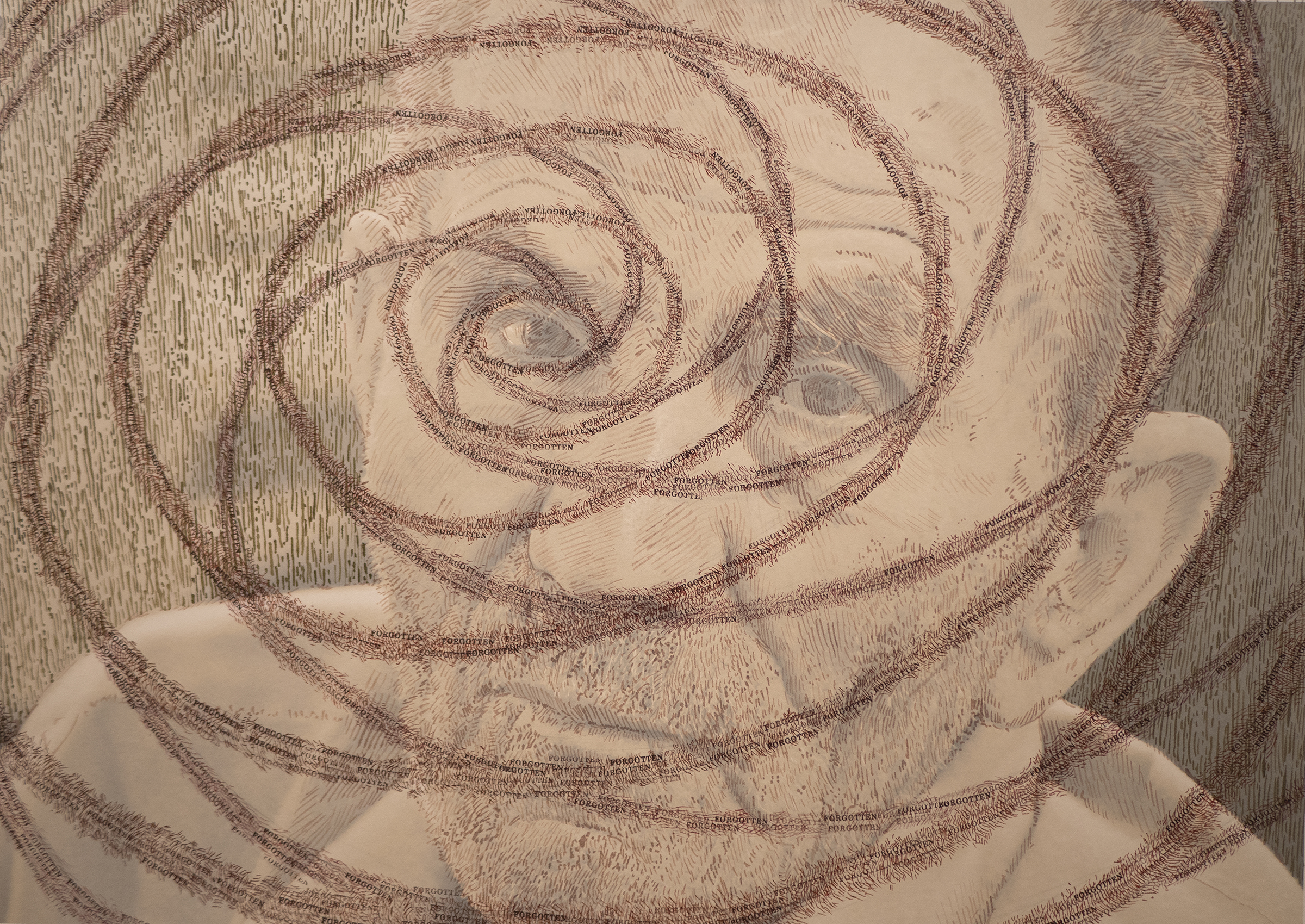
"One of the first things that I learned from recording the stories of survivors is that they're not invisible. They're not ghosts silently living in the shadows of the world consciousness. They are living, loving, suffering, and thriving individuals with unique experiences of displacement, survival, and resistance. They are not mute. They have stories to tell and are eager to share them. They want their stories to be heard and their realities to be seen. They want for their experiences of survival as well as those of their children and grandchildren to be known. The forgotten survivors of Palestine, as well as survivors from other native lands, have been rendered into an absence that is being filled with the presence of the settlers, whose strategy is to fully dominate native lands that are free of native people." —John Halaka
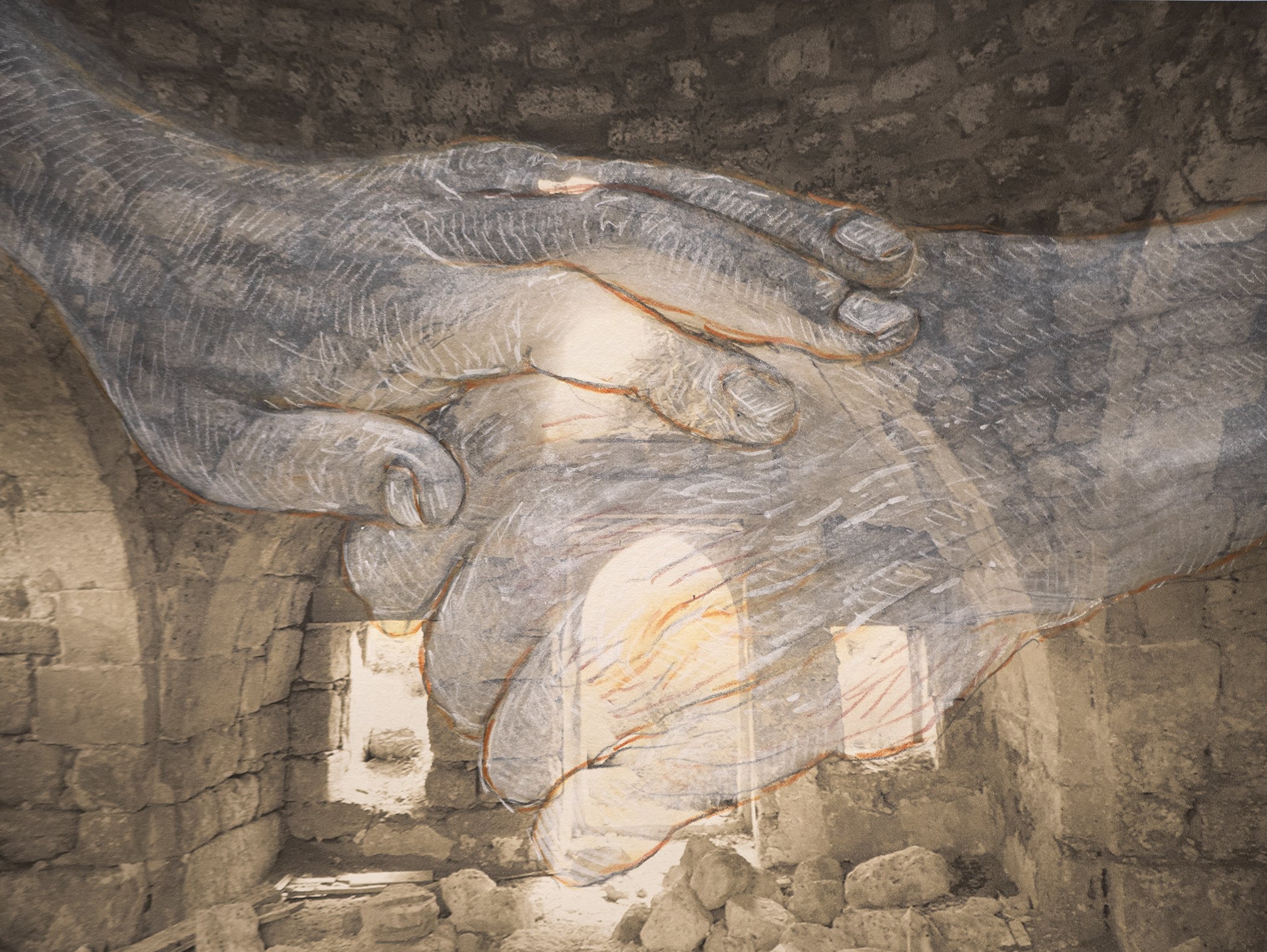
"Are we, as a people of goodwill who seek justice and abhor cruelty, willing to listen to [refugees'] unheard stories and to witness their unseen realities? Can we cultivate the moral imagination to stand in solidarity with the forgotten survivors? Can we reimagine a future of justice based on equality and not supremacy? And I'm not only speaking about Palestine and the Palestinians. We all have histories that define our relationships with oppressed people. Each and every one of us can have an impact on the condition and well-being of others. The drive to witness the unseen, to listen to the unheard, and to make the effort to heal the pain of others can be implemented on a very local level, literally across the street and across town. We need to ask ourselves, where can I help to realize the presence of justice and ensure the absence of cruelty?" —John Halaka